
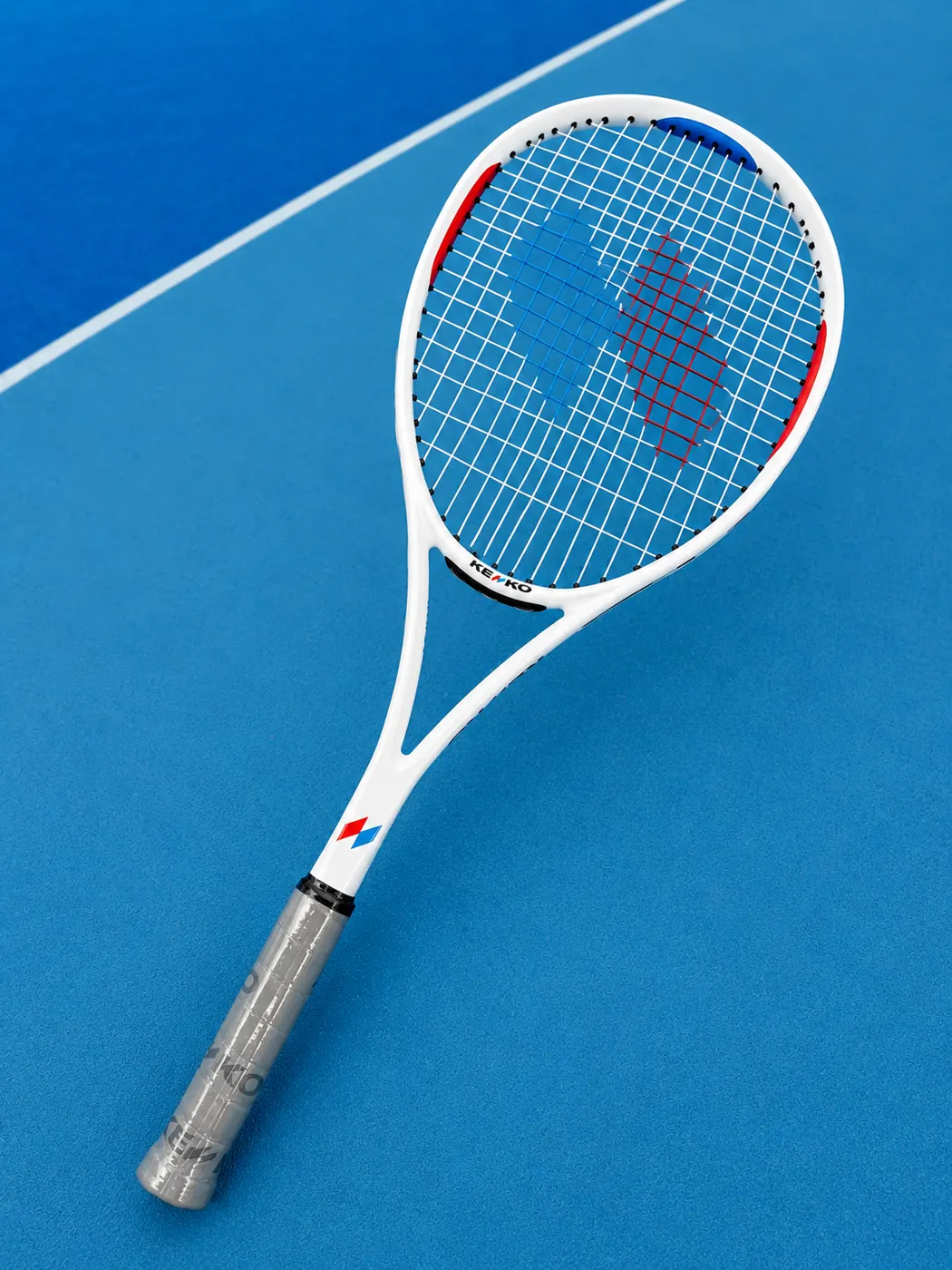
Good news to start with: you do not need to prepare long for your first soft tennis practice. The sport has a low barrier to entry and you will play your first rallies on day one. A few things are worth knowing beforehand, though, so that instead of improvising on court you can simply play.
What to bring
The basics are a racket, balls and a pump. If you are going to an organised session at a club or academy, equipment is usually provided and you do not need to buy anything for your first class. If you are heading to a court with a friend, you need two rackets and three or four inflated balls.
You can also try playing with a tennis racket. It is heavier and feels the ball differently, but it will do for your first hits. Once you decide you are staying, your first purchase should be a soft tennis racket, and the easiest way to start is with a ready-made set: racket, balls and pump in one order.
Shoes and clothing
Dress as for any racket sport: a shirt, shorts or leggings, nothing special. With shoes there is one rule: a court sole, not a running sole. Running shoes have high foam and are designed for forward motion, while in soft tennis you work sideways, with quick changes of direction. Tennis shoes or indoor court shoes give stability and spare your ankles.
In winter and in the evenings an outer layer comes in handy: play with a rubber ball can have calmer moments while learning, so it is easier to get cold between drills.
What to expect on court
The ball is slower and bounces lower than a tennis ball, so you have more time for every shot. That is why the first rallies come quickly — and that is the moment most people get hooked.
The coach will start with the racket grip and simple half-court hits, then move on to full rallies and the serve. Do not be surprised if the serve is underhand: in soft tennis a cut underhand serve is a normal technique, not a sign of amateur play.
If you are switching from tennis
Tennis players learn soft tennis quickly, but three things get in the way at first. First, timing: the lighter ball travels slower, so your first shots land too early. Second, power: the habit of hitting a hard ball firmly sends the rubber ball out — here spin and placement achieve more. Third, the grip and wrist work are different, and the racket is much lighter. Give yourself two or three practices to calibrate and it will click.
How much does it cost to start
Less than you think. The balls are cheap to maintain, because they do not lose their properties after a few hours of play like tennis balls — you just pump them up and keep playing. A starter racket does not need to be top-shelf, and any tennis court can be hired, with no special infrastructure. The cheapest route is a starter set, which gives you everything you need to play in one go.
Everything for your first practice in one set
See starter sets